
In many optical devices, light must change direction inside a very small space. Cameras, AR modules, scanners, and sensors all need light to bend, reflect, or split before reaching the sensor. Using mirrors or lenses for this task often creates alignment problems and light loss.
This is where an optical Prism becomes important. It controls light using its shape and material, without needing complex mounts or reflective coatings.
What Is a Prism in Optical Engineering?
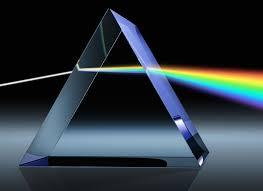
A prism is a solid transparent optical element with flat, angled surfaces. When light enters it, the light changes direction due to refraction or reflects internally due to total internal reflection.
Materials and Geometric Structure
Prisms are commonly made from:
-
BK7 optical glass
-
Fused silica
-
Sapphire or specialty glass
They are shaped into triangles, rectangles, or custom angles depending on the light path required.
How a Prism Controls Light
A prism works using three main optical effects:
-
Refraction to bend light
-
Total internal reflection to redirect light without coating
-
Dispersion to split light into colors when needed
This makes it very useful in compact optical paths.
Problems with Mirrors and Lenses in Light Redirection
Before prisms, designers used mirrors and lenses to redirect light. These create several issues.
Alignment and Stability Problems
Mirrors require mounting brackets. Small vibrations or temperature changes can shift alignment, affecting image quality.
Light Loss and Coating Wear
Mirrors depend on reflective coatings. Over time, coatings degrade, causing light loss and reduced performance.
How Prism Solves These Optical Challenges
The Prism is a single solid piece. It does not need coatings for reflection when using total internal reflection. This provides:
-
Stable alignment
-
Minimal light loss
-
Compact optical path
-
Long-term durability
This makes it ideal for precision optical modules.
Key Features Important for Engineers and Manufacturers
Engineers prefer prisms because they offer:
-
High optical clarity
-
No need for reflective coatings
-
Strong mechanical stability
-
Precise light control
-
Custom angle design
-
Long operational life
These features simplify optical system design.
Prism vs Mirror vs Lens
| Feature | Prism | Mirror | Lens |
|---|---|---|---|
| Light Redirection | Excellent | Good | Limited |
| Alignment Stability | High | Low | Medium |
| Coating Requirement | No (TIR) | Yes | No |
| Light Loss | Minimal | Moderate | Low |
| Durability | High | Medium | Medium |
| Compact Integration | Excellent | Difficult | Moderate |
Real Applications in Imaging, AR/VR, and Instruments
Prisms are used in:
-
AR/VR optical engines
-
Cameras and binoculars
-
Medical instruments
-
Laser systems
-
Scientific measurement devices
-
Periscopes and rangefinders
They are essential where light must turn inside a small device.
Why Manufacturers Prefer Prism in Optical Modules
Manufacturers choose the Prism because it reduces part count and improves reliability. It avoids alignment issues and coating failures.
It also helps designers create compact optical paths without adding extra mounts or components.
How to Choose the Right Prism
When selecting a prism, consider:
-
Material type (BK7, fused silica)
-
Angle and shape required
-
Surface quality and polishing
-
Size and thickness
-
Wavelength range of use
-
Coating needs (if any)
Matching these specs ensures accurate light control.
Conclusion
Modern optical systems require precise light control in very small spaces. Mirrors and lenses often create alignment and durability issues. Prisms solve these problems using solid geometry and optical principles.
Because of their stability, clarity, and compact integration, prisms have become an essential component in AR/VR modules, cameras, instruments, and advanced optical devices.

 English
 Arabic
 French
 Spanish
 Portuguese
 Deutsch
 Turkish
 Dutch
Dutch
 Italiano
 Russian
 Romaian
 Portuguese (Brazil)